

![Rykardo Agbor survives ghastly car accident weeks after father’s burial [VIDEO]](https://factmetro.com/wp-content/uploads/2026/09/Rykardo-Agbor-.jpg)
Nigeria @66: Reconstructing a nation for enduring prosperity

Nigeria @66: Reconstructing a nation for enduring prosperity
As Nigeria marks 66 years of independence and begins her 67th year as a sovereign nation, October 1 should be more than an occasion for celebration. It should be a moment for sober reflection: Where did we begin? How far have we travelled? What went wrong along the way? And, most importantly, how do we reconstruct a nation capable of fulfilling the aspirations of our founding fathers and the dreams of Generation Next?
The planned low-key Independence Day observance by the Presidency is, in my view, a fitting recognition of the mood of the nation. At a time when the expected gains of major interventions are yet to reach as many as desired, extravagance would hardly be appropriate.
At independence in 1960, Nigeria inherited a regional constitutional system in which the regions had considerable responsibility for their economic development. The economy was productive and largely agricultural. Cocoa powered the Western Region; groundnuts and cotton were major products of the North; palm produce sustained the East, while rubber, timber and other commodities generated employment, revenue and foreign exchange.
We produced much of what we consumed and exported substantial quantities of what we produced. The regions competed in education, agriculture, infrastructure and industrial development. Agriculture provided employment for the majority and supplied the foundation for economic growth.
That trajectory was disrupted by political crises, military intervention, the civil war and prolonged military rule. Perhaps the most consequential economic distortion was the emergence of petroleum as the dominant source of government revenue and foreign exchange. As oil revenues expanded, agriculture and other productive sectors gradually lost their commanding positions. Nigeria morphed from a predominantly production-oriented economy into one excessively dependent on petroleum revenues and imported goods, with daunting and enduring consequences.
Democratic rule since 1999 has brought notable gains in telecommunications, banking, infrastructure, agriculture and other sectors. Yet policy inconsistency, inadequate electricity, weak productive capacity, import dependence, an unsustainable subsidy regime and inadequate public revenue continued to constrain our potential.
It was against this background that President Bola Ahmed Tinubu assumed office on May 29, 2023.
The courage to reform
Politics apart, one economic truth is difficult to escape: no country can indefinitely consume what it does not produce, borrow continuously to finance consumption or sustain subsidies it cannot afford. Eventually, difficult choices become unavoidable.
The Renewed Hope Agenda represents an attempt to confront some of these structural weaknesses. The removal of the petroleum subsidy, foreign-exchange reforms, tax reforms, encouragement of domestic refining, decentralisation of electricity regulation and greater emphasis on private-sector-led growth have altered important aspects of the economic architecture.
The reforms have also imposed substantial short-term costs. Inflation and the erosion of purchasing power have placed considerable pressure on households, workers, pensioners and businesses. And the question often asked, when will the benefits of these reforms become visible in the pockets of the masses, cannot but be said to be legitimate.
That question must not be dismissed. It is being answered each day by government functionaries. Beyond answers, however, macroeconomic recovery does not automatically or immediately translate into household prosperity. Stabilisation must attract investment; investment must expand production; production must create jobs and increase supply; and rising productivity must eventually improve incomes and moderate prices.
There are signs that the first stage is taking hold. The World Bank’s April 2026 Nigeria Development Update said Nigeria had made meaningful progress in restoring macroeconomic stability, with improved inflation, fiscal and external positions. But it also noted that household incomes had not fully recovered and poverty still has to be frontally tackled.
That is where Nigeria stands: the foundations are strengthening, but the gains must now move from financial and macroeconomic indicators to the dining tables of Nigerian families.
From investor confidence to job creation
Capital dislikes uncertainty. When exchange rates are unpredictable, public finances are unstable and policies constantly change, investors either stay away or demand a premium for taking the risk. Greater policy clarity, improved foreign-exchange liquidity, fiscal discipline and a more predictable investment environment can therefore help attract long-term capital.
But investment must go beyond financial markets. Nigeria needs factories, agricultural processing plants, mines and mineral-processing facilities, electricity projects, petrochemical and pharmaceutical industries, technology companies, transport networks and infrastructure that allow small businesses to grow.
The ultimate measure of the reforms should move beyond the performance of the naira, foreign reserves or the stock market. The target from now should be increased production, investment, employment, lower inflation and rising real incomes.
Rebuilding the productive economy
The Nigeria we must build cannot remain principally an exporter of raw materials and an importer of finished products.
Returning to agriculture does not mean returning to the hoes and cutlasses of the 1960s. It means mechanised, technology-driven agriculture integrated with processing, storage, transport and export markets.
Our cocoa should feed Nigerian chocolate and confectionery industries. Cassava should support starch, pharmaceutical and industrial production. Tomatoes should supply processing plants. Cotton should feed textile industries. Our enormous gas resources should power industries and fertiliser production.
Powering industrialisation
No modern economy can industrialise without reliable electricity. The Electricity Act 2023 has opened the door to greater state participation in electricity generation, distribution and regulation. By 2026, a growing number of states had established their own electricity regulatory structures under the new framework.
The real test, however, is practical: more electricity for homes and factories, lower production costs and businesses capable of competing globally.
A fairer tax system
Nigeria needs adequate revenue to build roads, provide healthcare, educate its citizens and secure the country. But taxation must be fair, efficient and supportive of enterprise.
Higher revenue must go hand in hand with transparency and prudent public spending. Citizens should see a credible relationship between the taxes they pay and the quality of services they receive.
Our greatest resource
Nigeria’s greatest resource is neither petroleum nor solid minerals. It is the Nigerian people.
The establishment of the Nigerian Education Loan Fund is significant because it seeks to reduce the extent to which family income determines access to tertiary education. But access alone is not enough. Education itself must be reconstructed.
Our schools must prepare young Nigerians not merely to seek jobs but to create value. Technical and vocational education, STEM, artificial intelligence, programming, data science, renewable energy, modern agriculture and fabrication should become central to national development.
Energy, industry and infrastructure
For decades, it was an economic contradiction that one of Africa’s major crude-oil producers depended heavily on imported refined petroleum products. The expansion of domestic refining capacity offers an opportunity to reverse that anomaly.
But our ambition must go beyond petrol and diesel. Nigeria should develop the wider petroleum and gas value chain — petrochemicals, fertilisers, plastics, industrial chemicals and gas-based manufacturing. The objective should be to retain more value within Nigeria, conserve foreign exchange and create productive employment.
Infrastructure is equally fundamental. A good road connects farmers to markets; rail reduces the cost of moving goods; efficient ports improve export competitiveness; reliable electricity powers factories; broadband connects young Nigerians to the global economy.
Major investments in highways, rail, ports and other infrastructure should therefore be understood as components of an economic strategy, not merely construction projects. Their ultimate value lies in reducing logistics costs, expanding commerce and increasing production.
From macroeconomic stability to household prosperity
Nigerians do not live on macroeconomic statistics. They experience the economy through the price of food, transport, housing, electricity, education and healthcare.
The next phase of reform must therefore deliberately connect macroeconomic stability with household prosperity. The farmer, market woman, civil servant, pensioner, unemployed graduate, manufacturer and small-business owner must feel the difference.
This requires an aggressive assault on food inflation, insecurity, transportation and energy costs, alongside increased agricultural productivity, targeted social protection and stronger support for micro, small and medium enterprises.
The World Bank’s assessment is instructive: Nigeria has made progress on stabilisation, but translating that progress into improved livelihoods remains the central challenge.
The Nigeria we must build
Economic reconstruction must go beyond economic policy. We must strengthen institutions and the rule of law, deepen federalism, empower states and local governments to become genuine centres of development, rebuild agriculture and connect it to industry, generate reliable electricity, educate our children for productivity and invest aggressively in technology and innovation.
We must also reconstruct our national values. Integrity, discipline, patriotism, hard work, accountability, tolerance and respect for the dignity of labour must once again occupy their rightful place in our national character.
Government alone cannot reconstruct Nigeria. Leadership has responsibilities, but citizens do too. Nation-building must remain a partnership between government and the governed.
2027: From reform to consolidation
The structural reforms undertaken since 2023 cannot reasonably produce their full benefits overnight. The first phase has necessarily concentrated on correcting long-standing distortions, restoring confidence and rebuilding economic foundations.
The next phase must be about consolidation: attracting long-term investment, accelerating industrialisation, increasing agricultural production, creating jobs and ensuring that the gains of reform reach households.
As Nigerians approach another democratic choice in 2027, we will have the opportunity to assess where we were, where we are and where we want the country to go.
In my considered view, the Tinubu-Shettima administration deserves the opportunity to consolidate these reforms and move Nigeria from reform to recovery, from recovery to production and from production to shared prosperity.
This is not simply a matter of partisan loyalty. Structural reforms require consistency, patience and sufficient time to mature. The administration has taken difficult decisions that previous governments postponed or were unable to implement. Changing direction just as the foundations of macroeconomic stability are beginning to strengthen risks sacrificing the pain already endured without giving the country sufficient time to harvest the intended benefits.
The case for continuity is not that the government has solved every problem. It plainly has not. It is that the reforms should be given the opportunity to mature while government remains accountable for measurable improvements in production, employment, prices, incomes and living standards.
A renewed hope for Nigeria
At 66, Nigeria is no longer a young nation. We have experienced civil war, military rule, economic booms and recessions, democratic transitions and countless political and economic experiments. Yet Nigeria remains standing.
Our challenges are enormous, but so are our possibilities. We possess abundant natural resources, a huge domestic market, an entrepreneurial population, a strategic geographical position and one of the world’s largest concentrations of young people.
What Nigeria requires now is the discipline and consistency to convert these advantages into prosperity.
As we raise our flag on October 1, let us not merely celebrate the passage of another year. Let us renew our covenant with Nigeria. Let us build a country that produces rather than merely consumes; exports value rather than raw materials; innovates rather than imitates; and creates opportunities rather than exports its brightest young people.
The reconstruction of a new Nigeria is within reach, but the work is far from complete. The foundations are being laid. The responsibility now belongs to all of us to ensure that the reforms are fully implemented and translated into a more productive, prosperous and inclusive nation.
The time is now.
Happy 66th Independence Anniversary.
May God bless the Federal Republic of Nigeria.
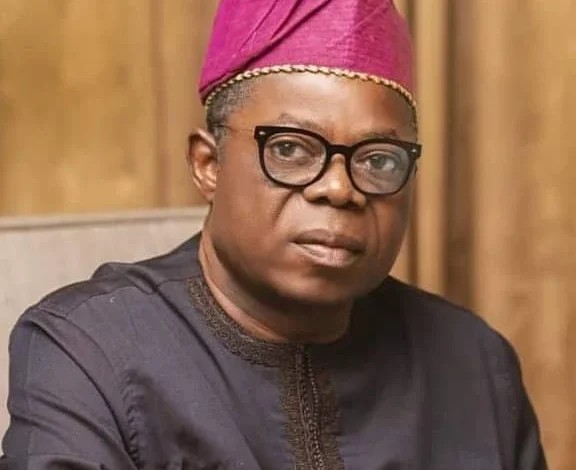
- Dr Adelami, mni is the Deputy Governor of Ondo State
All rights reserved. This material, and other digital content on this website, may not be reproduced, published, broadcast, rewritten or redistributed in whole or in part without prior express written permission from PUNCH.
Contact: [email protected]
Stay informed and ahead of the curve! Follow The Punch Newspaper on WhatsApp for real-time updates, breaking news, and exclusive content. Don’t miss a headline – join now!
Stay in the know—fast. Get instant alerts, breaking headlines, and exclusive stories with the Punch News App. Download now and never miss a beat.
Source: Punch Newspapers – Latest News